

01 / In everyday life
A vague project can feel easier to avoid than a named task. Busywork can offer a quick feeling of progress while an important call remains unmade. First check whether the obstacle is time, health, support or uncertainty. A person facing burnout, disability or inaccessible conditions is not choosing sloth by taking a break or asking for help.
02 / From the historical record
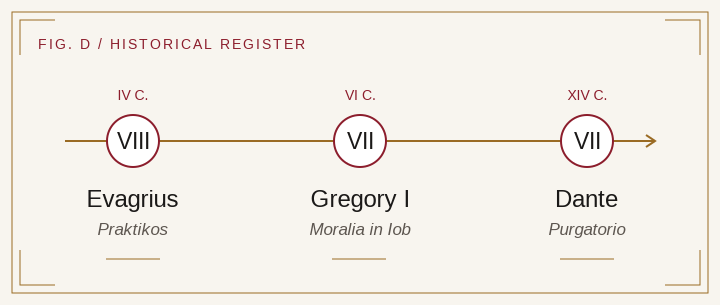
Evagrius’s Praktikos §12 describes acedia, the restless “noonday demon” that distorts the monk’s experience of time. Dante’s fourth terrace (XVII–XIX) makes its occupants hurry, a poetic answer to insufficient zeal. Neither image is a clinical description.
03 / Counterpart virtue · Diligence
Diligence is sticking with a feasible action. Instead of promising that the whole task will be done, write the first sentence, gather the missing document or put one short session on the calendar. When rest is the real need, plan rest without turning it into another failure to count.
04 / Questions for yourself
- What is the smallest action that would move this forward?
- Do I lack energy, clarity, time or willingness in this instance?
- Could I ask for help or set a shorter, more realistic commitment?