

01 / In everyday life
Novelty and the pleasure of feeling wanted can make an uncertain situation seem simple. Instead of asking what the other person wants, someone may assume the answer or delay the conversation. Attraction itself is not the problem. The useful question is what you do with it when expectations are unclear.
02 / From the historical record
Evagrius discusses sexual temptation largely in the context of monastic discipline in Praktikos §8. On Dante’s seventh terrace (XXV–XXVII), fire is a poetic image of purification. Neither historical image is a rule for assessing a modern relationship or a sexual orientation.
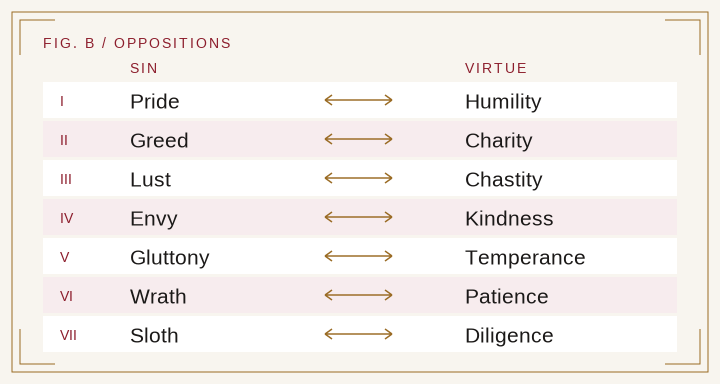
03 / Counterpart virtue · Chastity
The atlas uses chastity as a historical counterpart and reads it here as integrity in desire. Ask rather than assume; honor a no that is clear and preserve room for either person to change their mind. If an agreement no longer fits, discuss it before acting against it.
04 / Questions for yourself
- What important conversation am I putting off?
- When do I mistake attention for mutual agreement?
- What boundary would I still respect after the excitement fades?