

01 / In everyday life
A colleague’s promotion can reveal that you want more responsibility or public credit. Watch the next thought. Gathering information is different from treating their work as unworthy, repeatedly checking their updates, or quietly wishing for a reversal. You need not pretend there was no unfairness if a process really excluded you.
02 / From the historical record
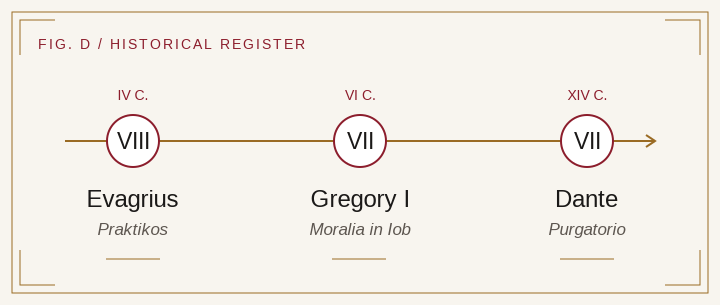
Envy is not named as its own entry in Evagrius’s eight thoughts, but it appears among Gregory I’s principal vices. On Dante’s second terrace (XIII–XIV), the envious have their eyes sewn shut. The image turns the habit of watching other lives into a striking loss of sight.
03 / Counterpart virtue · Kindness
Kindness allows two things to be true: you can wish for a similar opportunity and still recognize someone else’s good fortune. Offer a specific congratulations if sincere; then turn the comparison into a question about one step you can actually take.
04 / Questions for yourself
- What do I want that this comparison brings into focus?
- Did their gain reduce my opportunity, or does it just feel that way?
- Can I acknowledge their effort without denying my own disappointment?