
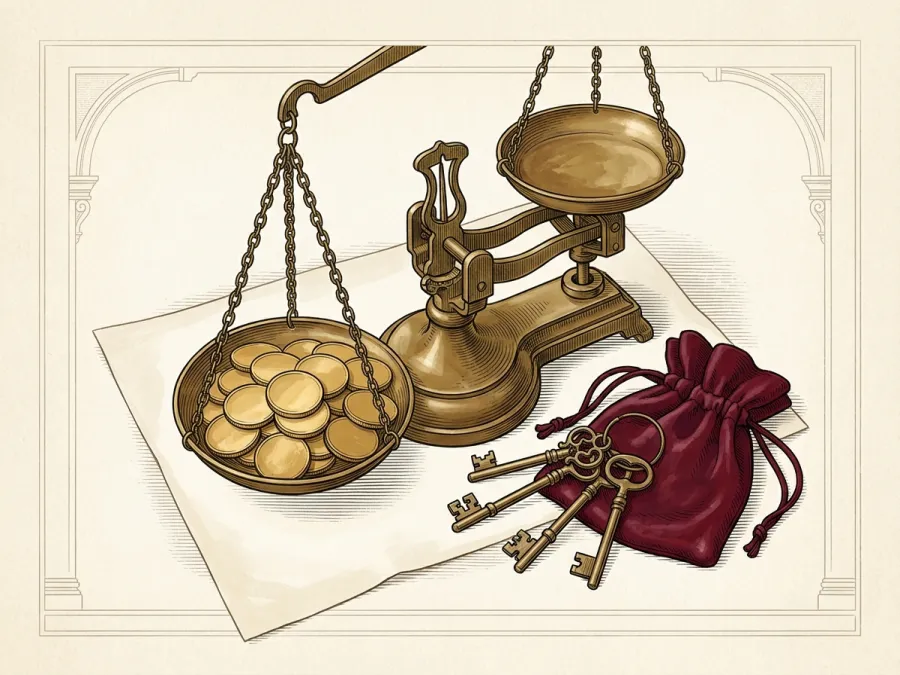
01 / In everyday life
Uncertain income can make a larger reserve reasonable. Greed is a different question: after deciding what would protect you, do you keep moving the goalposts or take more than the agreed share simply because no one objects? It can be about time, access and recognition as well as cash.
02 / From the historical record
Evagrius describes the love of money as looking ahead to old age, want and dependence in Praktikos §9. Dante’s fifth terrace (XIX–XXI) treats avarice and its contrary excess, prodigality. The earthbound posture invites a question about what the characters paid attention to while alive.
03 / Counterpart virtue · Charity
Charity here means generosity that can be sustained. Decide what needs protecting before promising help. Offer a useful introduction, acknowledge someone who did invisible work, or share a document that need not be exclusive. Do not use the virtue as a reason to give beyond your means.
04 / Questions for yourself
- What number or condition would tell me I already have enough?
- What could I share at little real cost?
- Where have I mistaken an available advantage for a fair one?