

01 / In everyday life
A public correction threatens reputation as well as an idea. The reaction may be to explain credentials, question the other person's rank or conceal a small mistake. Notice whether you would judge the same advice differently if it came from someone you admire. Ambition and self-respect do not require dismissing the information.
02 / From the historical record
In the Praktikos, Evagrius counts vainglory and pride separately. Gregory I places pride at the root of the family of vices in Moralia in Iob. On the first terrace of Dante’s Purgatorio (X–XII), proud souls bend under stones: pride becomes visible in a posture that can no longer look down on others.
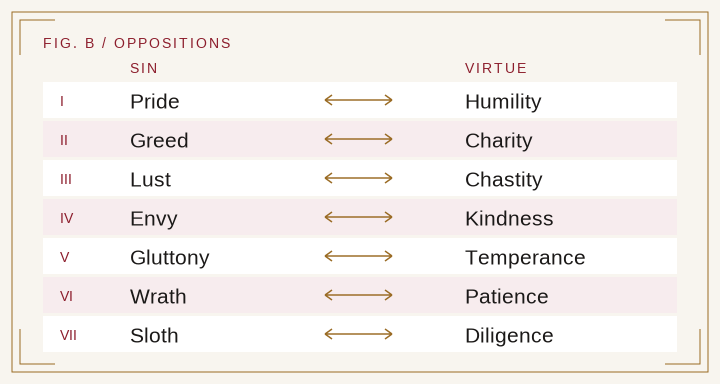
03 / Counterpart virtue · Humility
Humility is a more accurate view of yourself, not a smaller one. If someone questions a conclusion, repeat the part you understand and ask for an example before you explain your evidence. On a project, name one other person's contribution as precisely as you would name your own.
04 / Questions for yourself
- Which correction would I be willing to hear in private but not in public?
- Whose good advice do I dismiss before considering it?
- What would accurate credit for this work look like?